01 / Sketch
Sketcher: sketch cost drivers
Constraint count and sketch complexity set the modeling hours per part.
Read guideCost reference / measured January 2025
Every figure below comes from spool invoices and scale measurements taken on my own bench between 2023 and 2025. Prices are in US dollars per kilogram for filament bought in single spools from US suppliers. Use the tables to price a part before you model it, not after you print it.
Observation log / cost drivers
In twenty-eight quoted jobs the same six parameters explained almost all of the spread between a $9 part and a $140 part. None of them is the spool price on its own.
01 / Sketch
Constraint count and sketch complexity set the modeling hours per part.
Read guide02 / Volume
Pad, pocket and fillet order changes rebuild time and material waste.
Read guide03 / Variables
Drive wall thickness and infill from one table instead of editing sketches.
Read guide04 / Drawings
Dimensioned views with tolerances make supplier quotes comparable.
Read guide05 / Export
Mesh deviation under 0.05 mm keeps file size and print cost predictable.
Read guide06 / Evidence
Ten parts with measured filament grams, print hours and final price.
Read guideMethod / step by step
Cost calculation starts with the solid volume of the part, not with the size of the spool. In the PartDesign workbench FreeCAD reports an exact volume in the model tree: select the Body, open the Data tab, and read the Volume property in cubic millimeters. Divide by 1000 and you have cubic centimeters, the unit every table on this page uses. The bounding box is useless for pricing, because a hollow housing and a solid block of the same outer size differ by a factor of six in material.
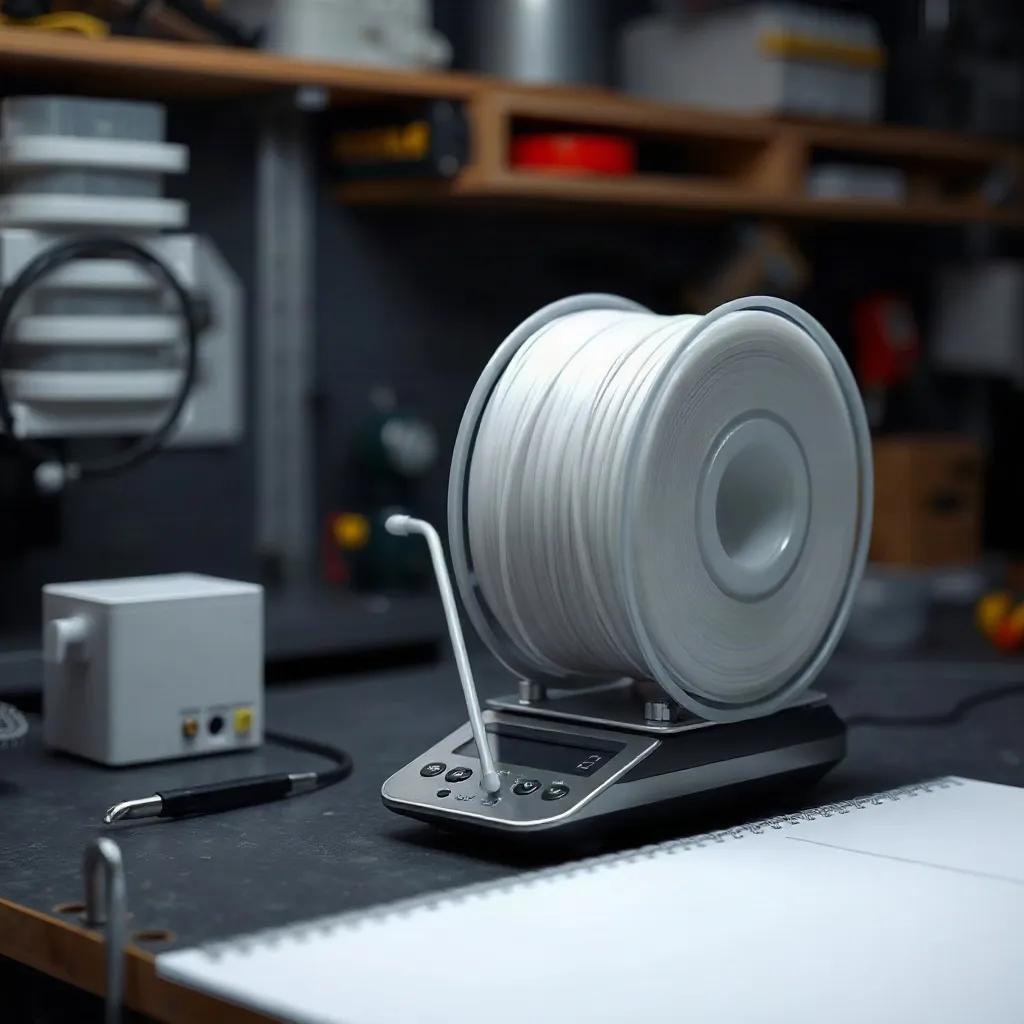
The second variable is infill. Slicers never fill the interior completely, so the extruded volume is roughly the wall volume plus the infill fraction of what remains inside. On a 60 mm cube with a 2 mm shell, walls account for about 30% of the solid volume; adding 20% infill on the rest puts real consumption near 44%. Weigh one finished part and you have a correction factor for that material and profile that stays valid for months of production.
Control check
PETG bracket, 48 cm³ solid, 0.44 infill fraction: 21.1 cm³ × $0.032 = $0.68 of filament. Print time 3 h 10 min at $3.50/h = $11.08. Twenty minutes of modeling and cleanup at $35/h = $11.67. With a 10% failure allowance the part lands at $25.70. Filament is under 3% of that number — the rest is time.
"I weighed the first twenty brackets and the slicer estimate was off by 9%. Now I print one coupon per spool, weigh it, and the correction factor is set for the whole reel."

Reference data / material
The cost per cubic centimeter is the only column you need for a quote. It is calculated as spool price divided by 1000, multiplied by the density of the material, and it covers material alone — no waste, no purge, no failed prints.
| Material | Density, g/cm³ | Price, $/kg | Cost per cm³ | Typical use |
|---|---|---|---|---|
| PLA | 1.24 | 22 | $0.027 | Display models, jigs |
| PLA matte | 1.30 | 26 | $0.034 | Visual prototypes |
| PETG | 1.27 | 25 | $0.032 | Brackets, ducts |
| ABS | 1.04 | 22 | $0.023 | Enclosures |
| ASA | 1.07 | 29 | $0.031 | Outdoor parts |
| TPU 95A | 1.21 | 40 | $0.048 | Gaskets, feet |
| PA12-CF | 1.06 | 85 | $0.090 | Load-bearing fixtures |
| PC | 1.20 | 45 | $0.054 | Hot housings |
| Standard resin | 1.10 | 48 / L | $0.053 | Small detailed parts |
| Tough resin | 1.12 | 72 / L | $0.081 | Snap fits, connectors |
Reference data / machine time
Machine time is the largest line item on a single-unit order. A 250 W printer draws roughly 0.12 kWh per hour of run time, which at $0.17 per kWh is two cents — the rest of the hourly rate is wear, nozzles, belts, bearings and the maintenance reserve you will eventually spend. On my bench a 6-hour print costs more than the plastic in almost every part I quote.
Part cost = (extruded cm³ × cost per cm³) + (print hours × machine rate) + (labor minutes ÷ 60 × labor rate) + failure allowance
Across 28 quoted jobs the split held steady: machine time 40–55% of the final price, labor and setup 25–35%, filament 8–15%, and the failure allowance the remaining 8–12%. Any quote that ignores machine hours is a quote that loses money on long prints.
"A 6-hour print on a $3.50 machine costs more than the plastic in almost every part I quote. I price time first and material second."
More measured numbers from finished jobs are collected in the project gallery, and the assumptions behind these rates are documented on the author page. If you want the modeling side of the workflow first, start with the practical FreeCAD guide.
Next step
Take one part you already printed, read its volume from the FreeCAD Body, weigh the finished piece and run the five steps above. The difference between the estimate and the invoice is your correction factor — write it down and the next quote takes four minutes instead of forty.